Reading Your Home Dashboard
Your Home screen is the daily command center: it shows live KPI stats, today's arrivals and departures, occupancy, and one-tap quick actions.
Open the Home screen
The Home screen is the first page you see after signing in. To return to it at any time: 1. Click the Hostel Agent logo at the top of the screen, or 2. Click the first item in the left sidebar (the home / dashboard icon). If you manage more than one property, use the property switcher at the top of the page to choose which property's numbers you want to see. Selecting "All Groups" combines every property into one view. The whole screen refreshes automatically, so the figures you read are always for today.
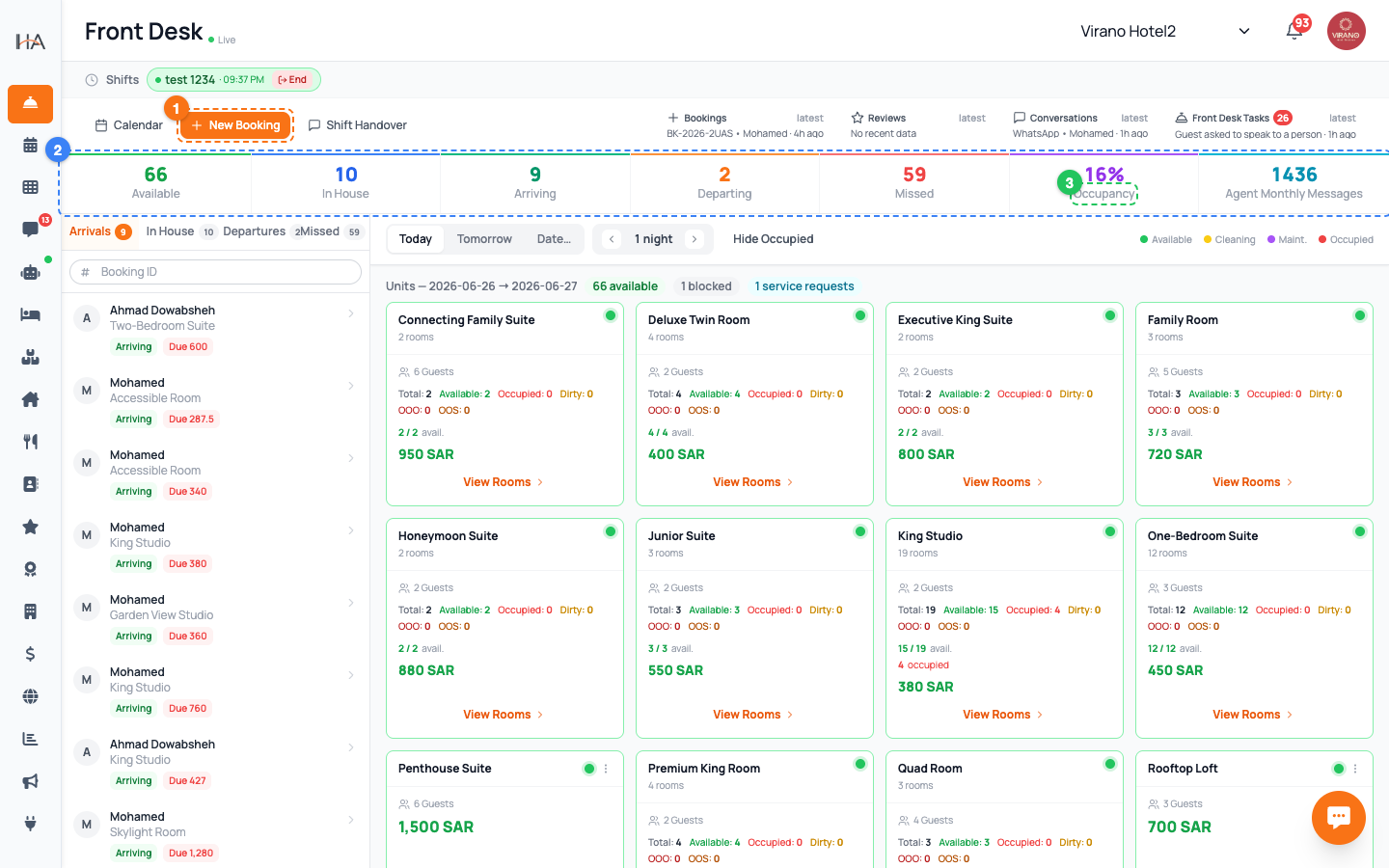
Read the top KPI stats row
Across the top of the page sits a row of colored stat tiles that summarize today at a glance: - Available - rooms or units still free to sell right now - Arriving - guests due to check in today - Departing - guests due to check out today - In House - guests currently staying with you - Occupancy - the percentage of your inventory that is occupied Each tile shows a large number and a small colored bar. A high Available number means you still have rooms to fill; a high Occupancy percentage means your property is close to full.
Use the Today's Activity tabs
Below the stats is the Front Desk activity panel with four tabs: - Arrivals - guests checking in today who have not yet checked in - In House - guests currently staying - Departures - guests checking out today - Missed - guests who were due to arrive but never checked in (no-shows) Click a tab to see that list. Each row shows the guest name, unit, and check-in/check-out dates. This is the fastest way to see exactly who is coming and going today so the front desk can prepare keys, rooms, and welcomes.
Understand the unit (room) status cards
The lower part of the Home screen shows a card for each room or unit, color-coded by status: - GREEN: Available - free and ready to sell - RED: Occupied - a guest is currently staying Each card shows the unit name and, when occupied, the guest's check-out date. Use these cards to spot at a glance which rooms are ready, which need cleaning, and which are out of order.
Take quick actions from a room card
Each unit card has fast action buttons so you do not have to leave the Home screen: - New Booking / Book Walk-in - create a reservation for a guest standing at the desk - View Booking - open the current guest's reservation when the room is occupied - View Rooms - drill into a group of rooms to see them individually The small menu on each card also lets you block or unblock a room. These shortcuts keep day-to-day operations on one screen.
Check the front desk cash and balances
If front desk shifts are in use, the Home screen also surfaces money figures the receptionist needs: - Opening Cash Balance - the cash drawer amount when the shift started - Card Payments Total (Actual) - card payments collected during the shift - Outstanding Departures - guests checking out today who still owe a balance - Pending arrivals - bookings expected today that are not yet checked in These highlight where attention is needed: a guest with a balance due, or an arrival that has not shown up. Settle balances before checkout and follow up on pending arrivals near the end of the day.
Move from the dashboard to detailed reports
The Home screen gives you the live picture of today. When you need history, trends, or printable summaries, open Reports from the left sidebar. 1. The Home screen answers "what is happening right now?" 2. The Reports section answers "what happened over a period?" - occupancy over a month, revenue by source, cancellations, and more. A good daily habit: glance at the Home dashboard each morning to plan the day, then review the Reports section weekly to understand performance and spot trends.
More in Reports
The Reports Hub
Find every report in one place. The Reports section is organized into a quick Summary & Charts view and a Detailed Reports grid grouped by category.
Opening & Reading a Report
Learn what you see inside any report - the title bar, the data table, the summary totals, and the buttons to print or export.
Occupancy & Revenue Reports
Track how full your property is and how much money it earns using the Daily Occupancy, RevPAR / ADR, and Room Revenue Summary reports.
Operations & Source Reports
See where your bookings come from and how your money is collected using the Booking Source, Cancellation, Payment, and Day Closing reports.
Filtering, Date Ranges & Exporting
Master the filter bar on every report - property, unit, and date range - then print, save as PDF, or export to a spreadsheet.